Nicaragua: Mi amigo, Roberto--ROADTRIP !!!
Relatively speaking, I am a novice when it comes to world travel. So far, I have been to 8 countries on three continents and am planning more. In my travels I have managed to meet some of the nicest people. Most recently while in Nicaragua, I met Robert one day at the front desk of the small hotel at which we were both staying. I found out he is completely fluent in English and Spanish, lives in Miami, was born in New Orleans, and his mother is Nicaraguan living in Miami. He spent the early years of his youth growing up in Nicaragua before the devastating 1972 earthquake that hit the county demolishing buildings in Managua and killing more than 10,000 people. He subsequently moved to the USA after the earthquake and attended Upper Merion High School outside Philadelphia before returning to Nicaragua to finish high school. As it turned out, the hotel is the former site of his family home before the earthquake and his mother rebuilt the property into a lovely little boutique hotel. It was a happy coincidence that I found the hotel and stayed there. Robert was in Managua for a few days on business. A kind and gracious man, Robert invited me along on some of his business excursions so that I could see and experience the "real" Nicaragua rather than only the side of it tourists see. The experience has been priceless. We visited places (small towns, beaches, mountains, Nicaraguan homes, indoor market places, farmers' markets, etc.) that are likely on few tourist maps and probably have never been visited by National Geographic !!!
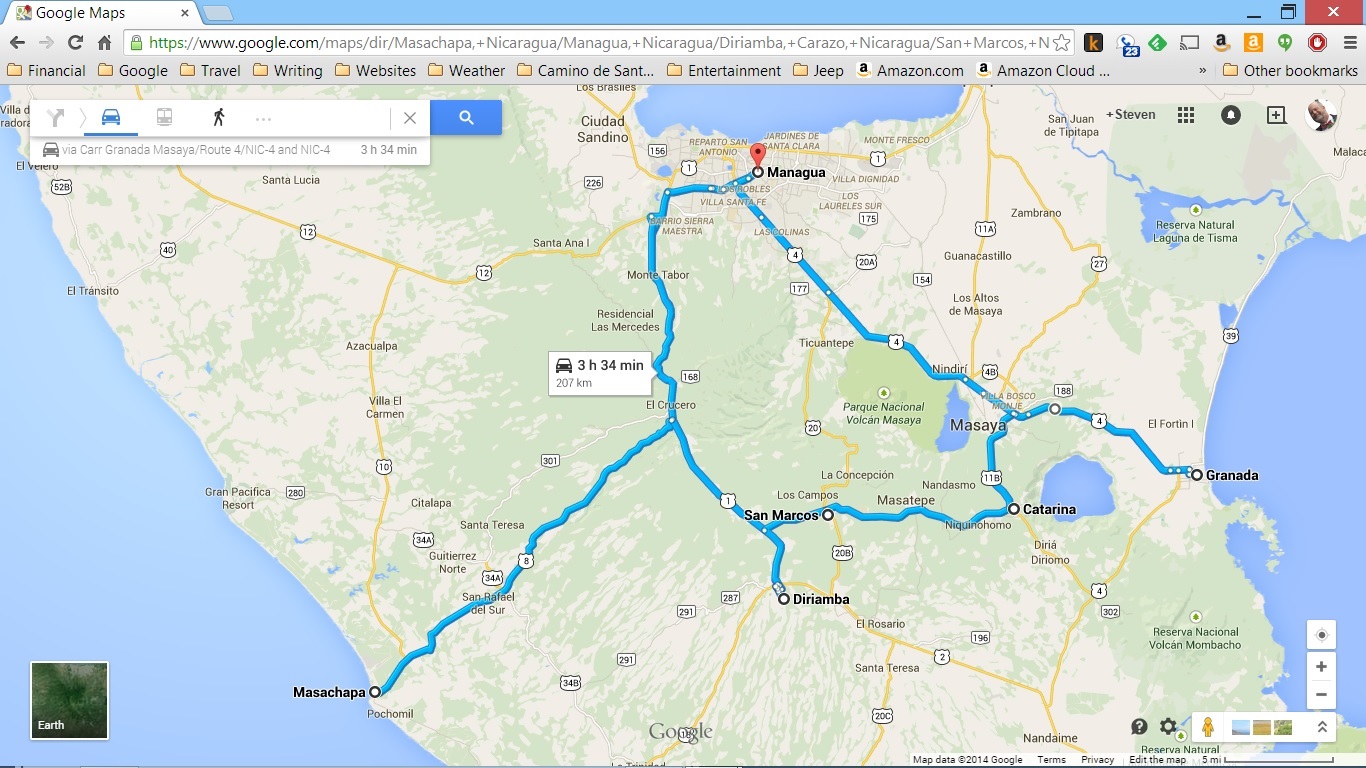
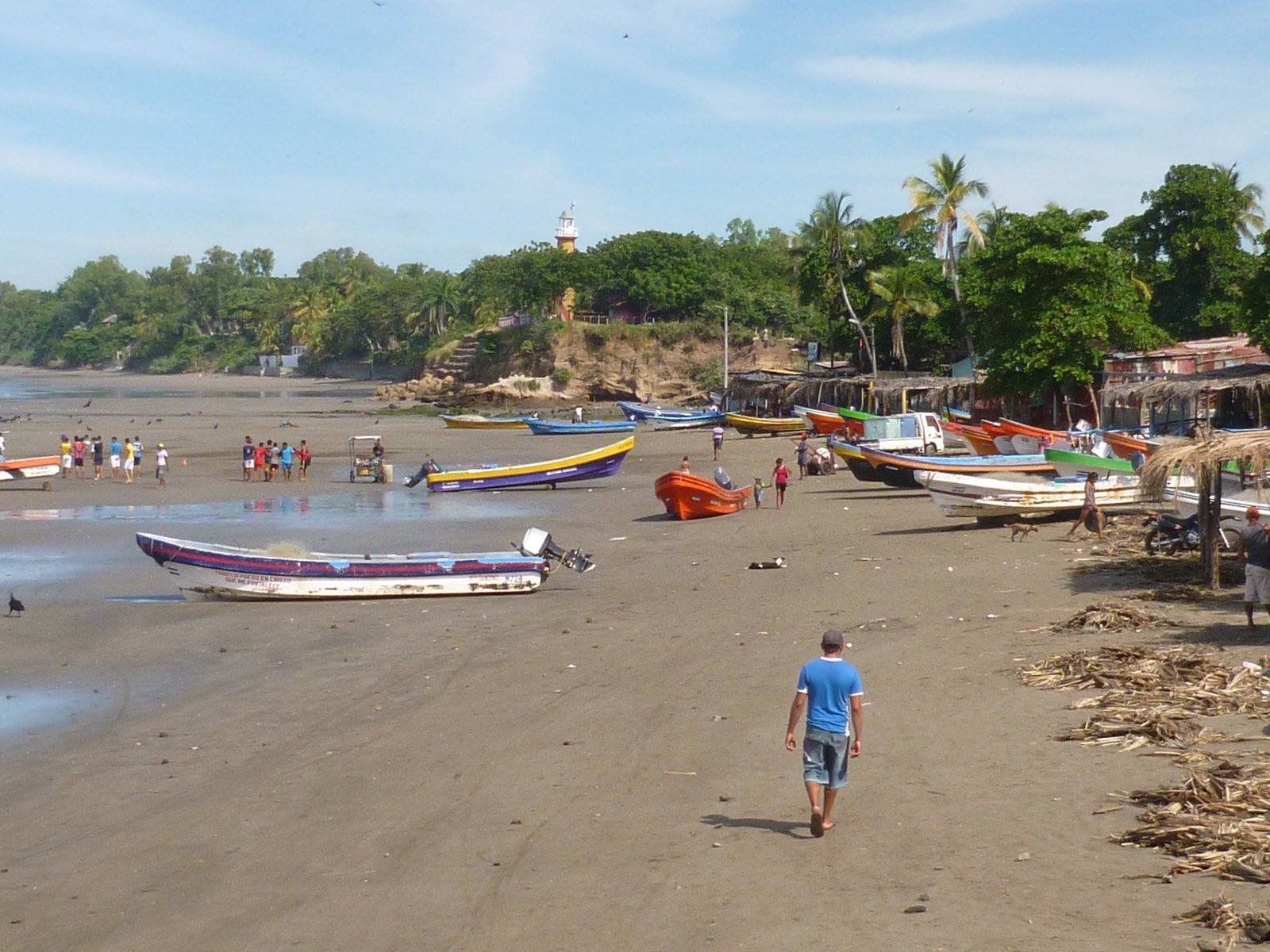
Geographically, we made a fairly large circle through the countryside around Managua on the southwest side of Nicaragua--a total of more than 200 km (for we metrically challenged Americans that's roughly 130 miles) to the Pacific coast and back to the shores of Lake Nicaragua and Lake Managua. Heading southeast out of Managua we drove to a little coastal town named Masachapa. The town is on the Pacific coast and the beach is scattered with working fishing boats. It's a sleepy little town that probably is hopping on weekends but seemed like there was little going on during the weekdays in December. From the deck of a small beach side restaurant, we saw beautiful views of the Pacific Ocean and got a glimpse of working life in a small fishing village.
It appeared that the fishing fleet was already in for the day and fisherman were working on some of their boats. One boat apparently needed some engine repairs on the approximately 80 hp outboard. Now in the USA, we would trailer that boat near the repair shop and use a block and tackle or hydraulic lift to raise the heavy engine off the boat. Here, however, about 6 guys simply unloosened the bolts and lifted it by hand off the boat onto a waiting hand truck to wheel it across the sandy beach. The outboard had to weigh about 400 pounds but doing things by hand is the way things are done in Nicaragua. Equipment is hard to come by. These engines are heavy and to remove them by hand was an impressive sight !
Up
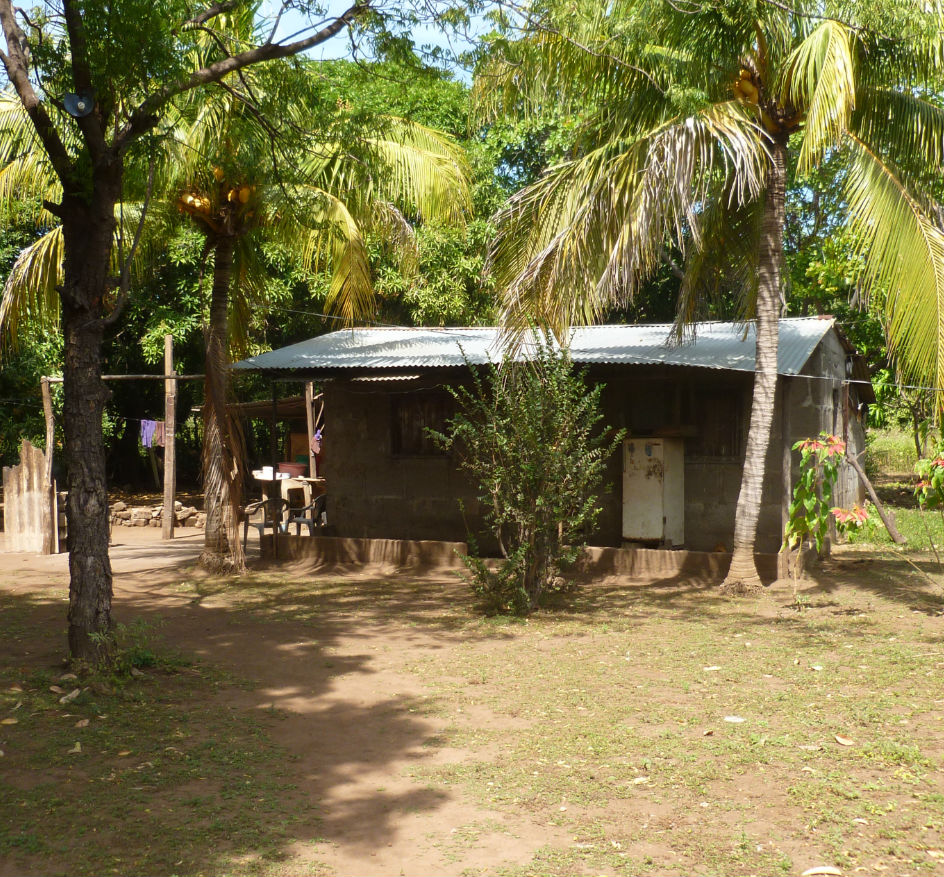
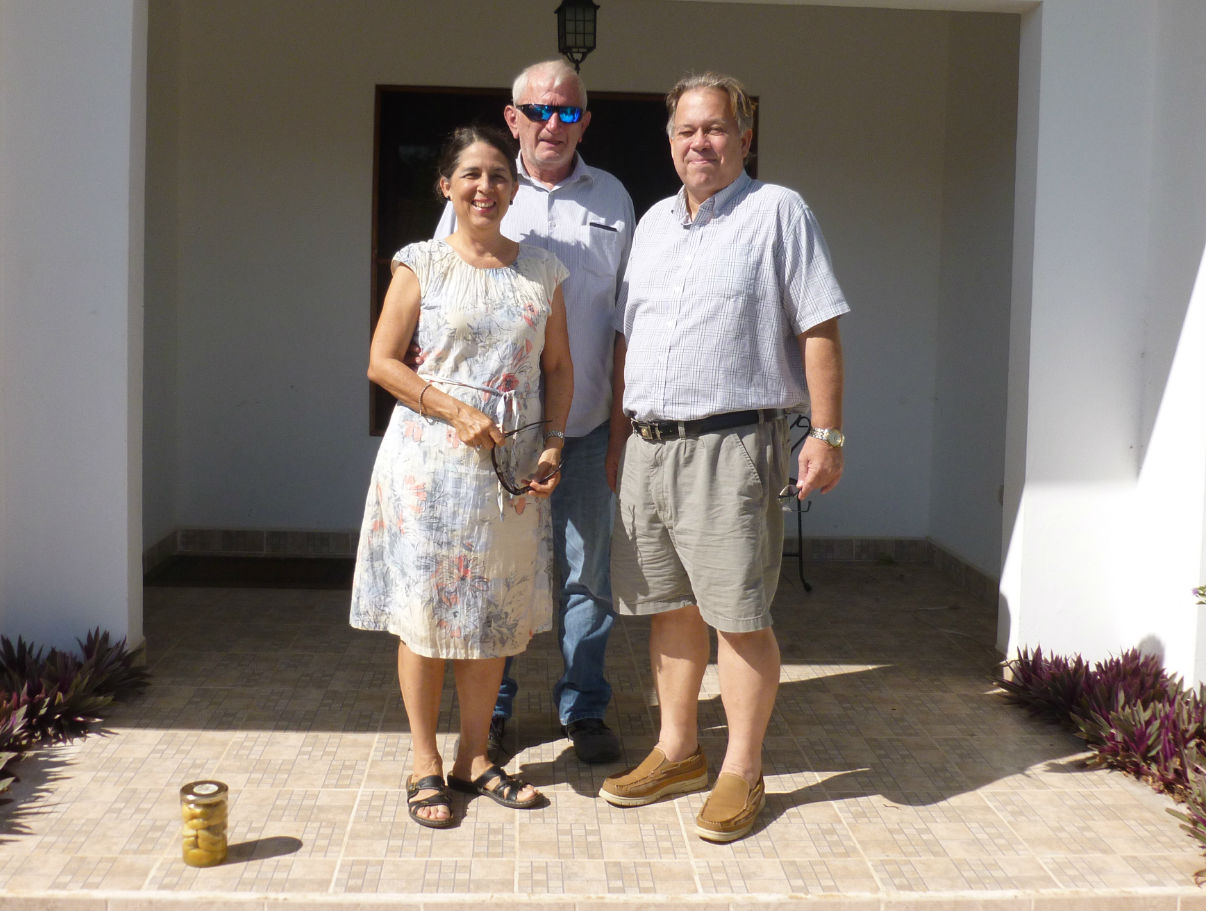
As we made our way up the mountains from the beach (about 300 meters above sea level), the outside temperature dropped noticeably. We no longer needed the air conditioning in the car and the air was refreshing after the heat of Managua. As we got closer to the town of Diriamba, I had the good fortune to meet some of Robert's family. We enjoyed great conversation over some 18 year old Nicaraguan rum (Flor de Cano) with interesting stories of Nicaragua past. I was told that Maria Elena, a simply delightful lady, was Robert's "grandmother's daughter" (think about that one !). Her husband, Dale, is from the USA but has lived all over the world and had some entertaining stories to tell. They made me feel like a genuinely special visitor and shared a delicious lunch. I had a wonderful time. I look forward to seeing them again on my next trip to Nicaragua. Maria Elena is an educational psychology professor at the local university and has invited me back to speak with her students and faculty members about education in the USA, Penn State, and all things education. I can't wait to go back.
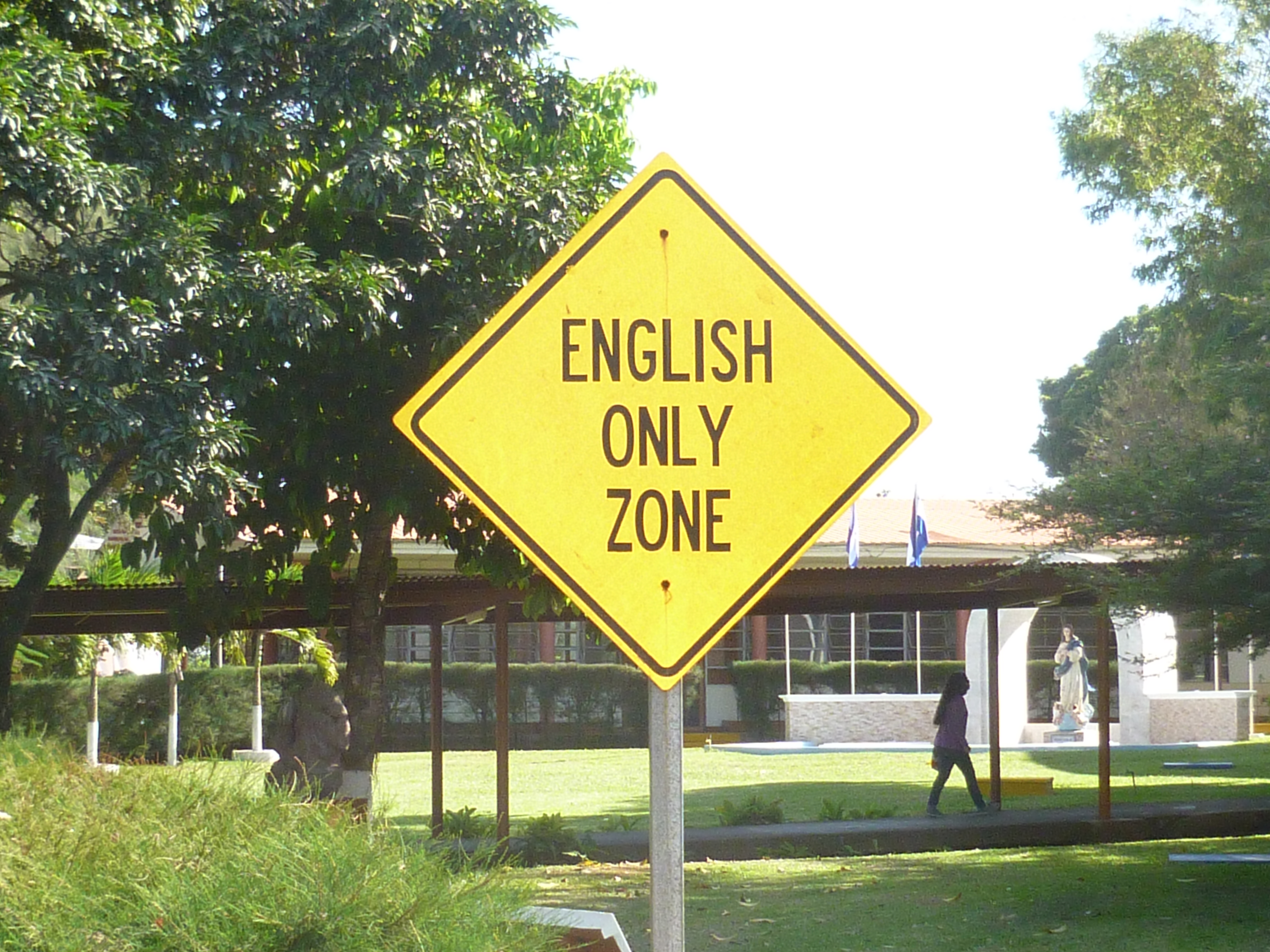
After leaving their home, we headed to San Marcos, an interesting little college town tucked up in the mountains with the requisite housing, food/pizza joints, bars, and night spots. San Marcos is home to Keiser University--Latin America Campus, formerly Ava Maria College of the Americas. The university has a strong English language program and in certain sections of the campus all are required to speak only English. Students I encountered on campus had excellent English skills and were pleasant and welcoming--although I'm sure they were wondering how a tall Gringo managed to get by security !
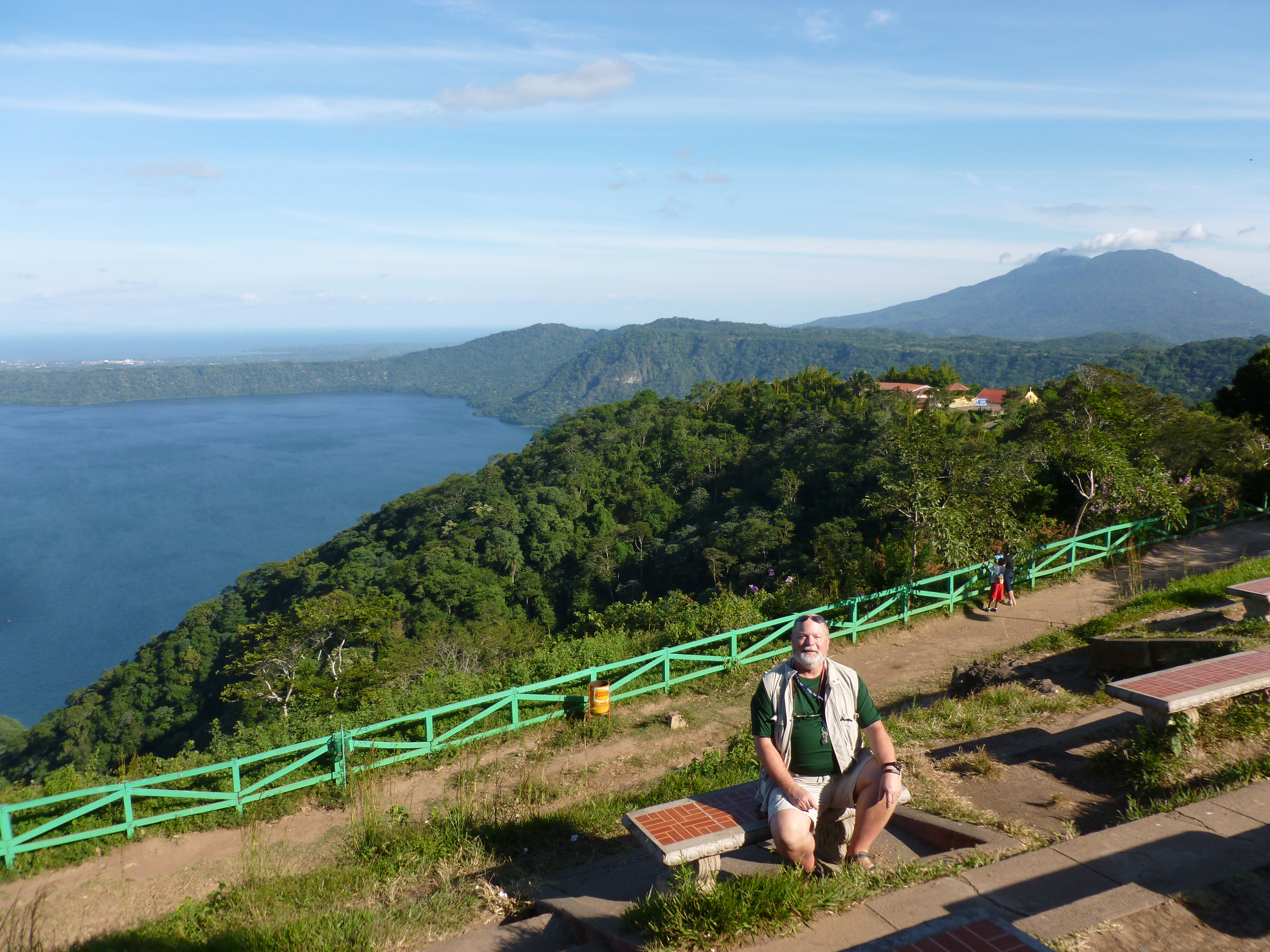
From San Marcos, we headed to the little town of Catarina, a tourist attraction tucked high up in the mountains with a spectacular view overlooking a volcanic crater lake (Laguna De Apoyo) that is approximately 600 feet deep. The cone of the volcano is thought to have imploded some 23,000 years ago. Water filling the void is the most crystal-clear out of all fresh water bodies in Nicaragua and possibly in Central America. Since light only penetrates water to a depth of about 200 feet, the lagoon is home to some very interesting species of fish and naturalists are still discovering what lurks at the dark bottom of the lake. Although various species of mojarras can be found elsewhere in the world (e.g., Caribbean), there are four specific species of mojarras that are thought to be found exclusively in this lagoon, the first of which was only discovered in 1976 (Arrow Mojarra, amphilophus zaliosus). The other three species have yet to be named.
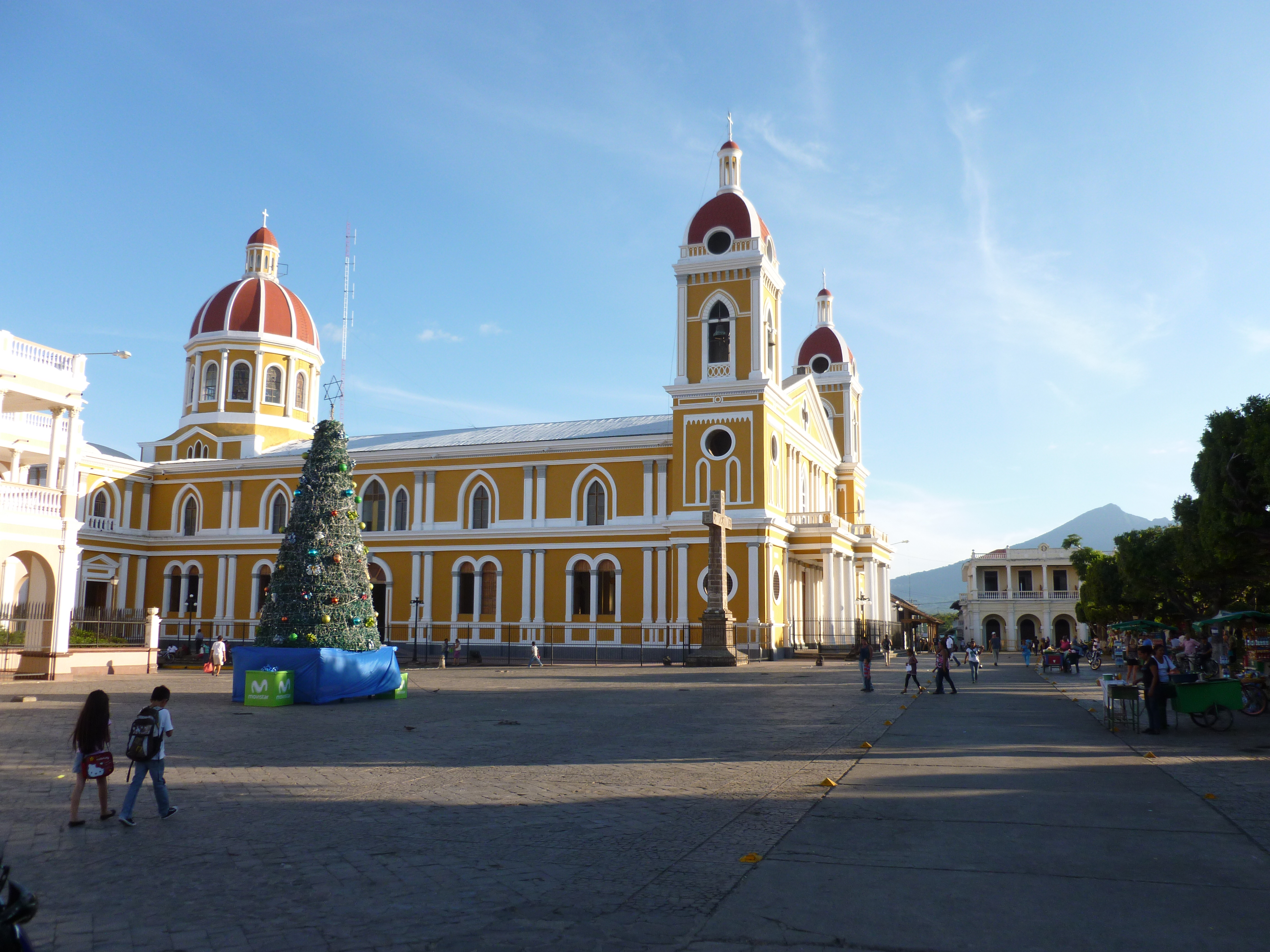
As we left Catarina and drove around the volcano to the north and east we were on our way to the town of Granada. Granada is one of the major tourist attractions in Nicaragua best known for its early Spanish colonial architecture. The old cathedral is beautifully restored and the downtown park is bustling with street vendors and tourists. You can go for a carriage ride, eat local street food, find pretty good cigars, and drink beer. Housing is a little more expensive in this area because of the increased tourism, but it is a beautiful little town nestled on the shores of Lake Nicaragua. Tortillas being made by hand, fruits, cookies, and other delights were readily available on the street. Granada is on my list of towns to visit for a few days on my return to Nicaragua.
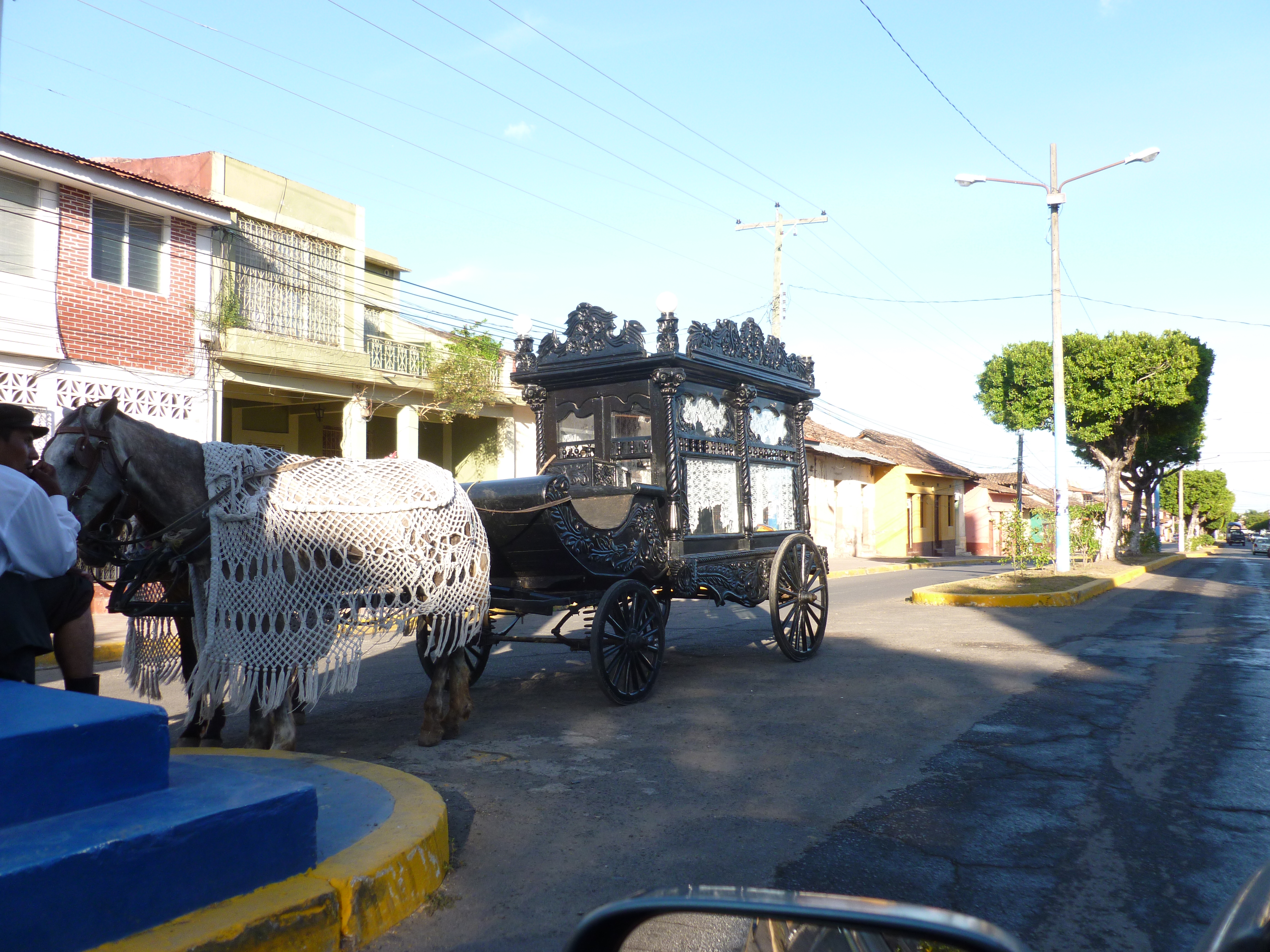
Muchas gracias, mi amigo Roberto...!!!
You should also read:
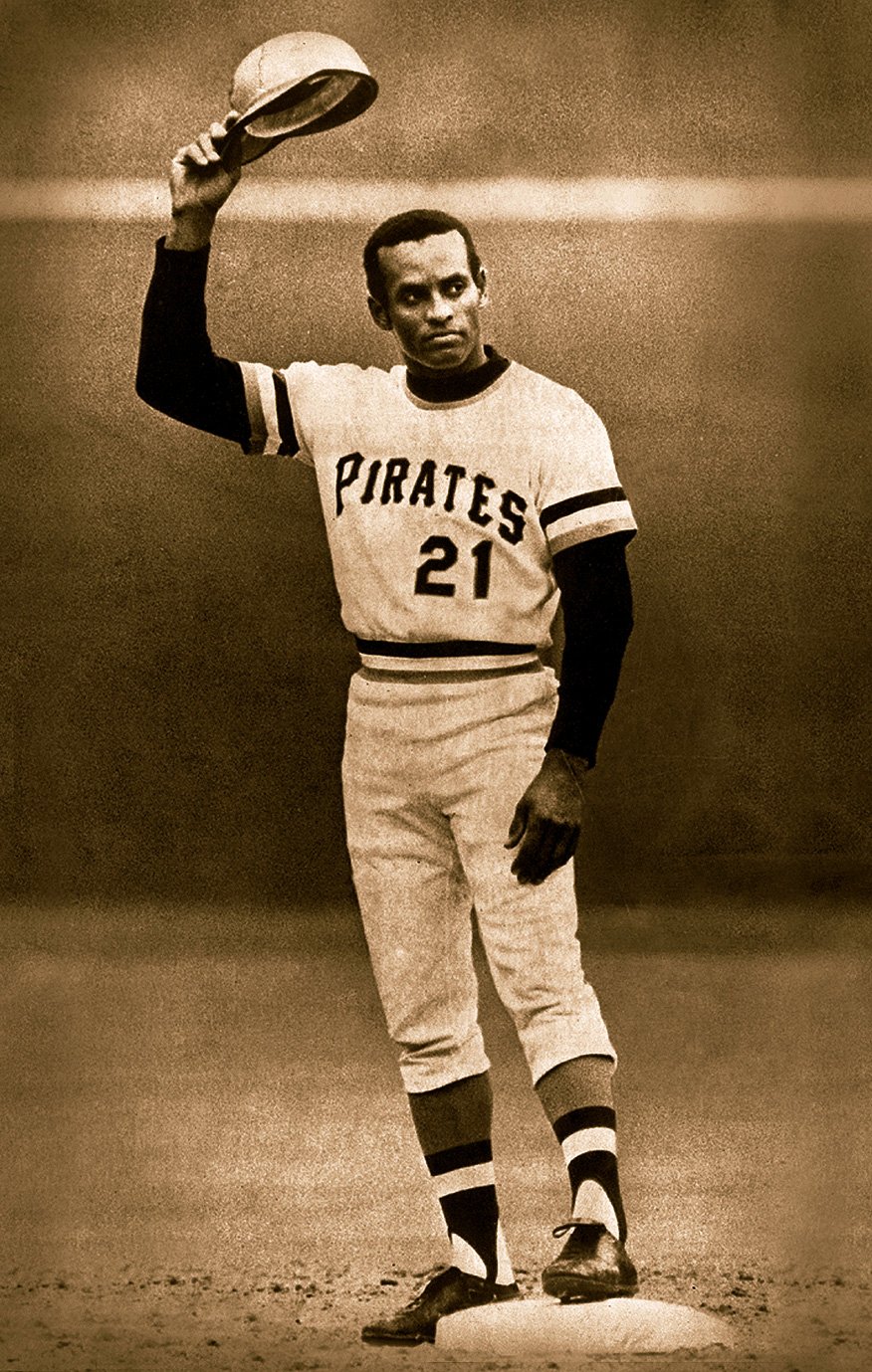
Nicaragua: Honoring Roberto Clemente
"I want to be remembered as a ballplayer who gave all he had to give." -Roberto Clemente As a young child, I remember falling in love with baseball. Baseball players were my heroes and my friends and I traded baseball cards for our favorites (Oh, to…
Continue reading...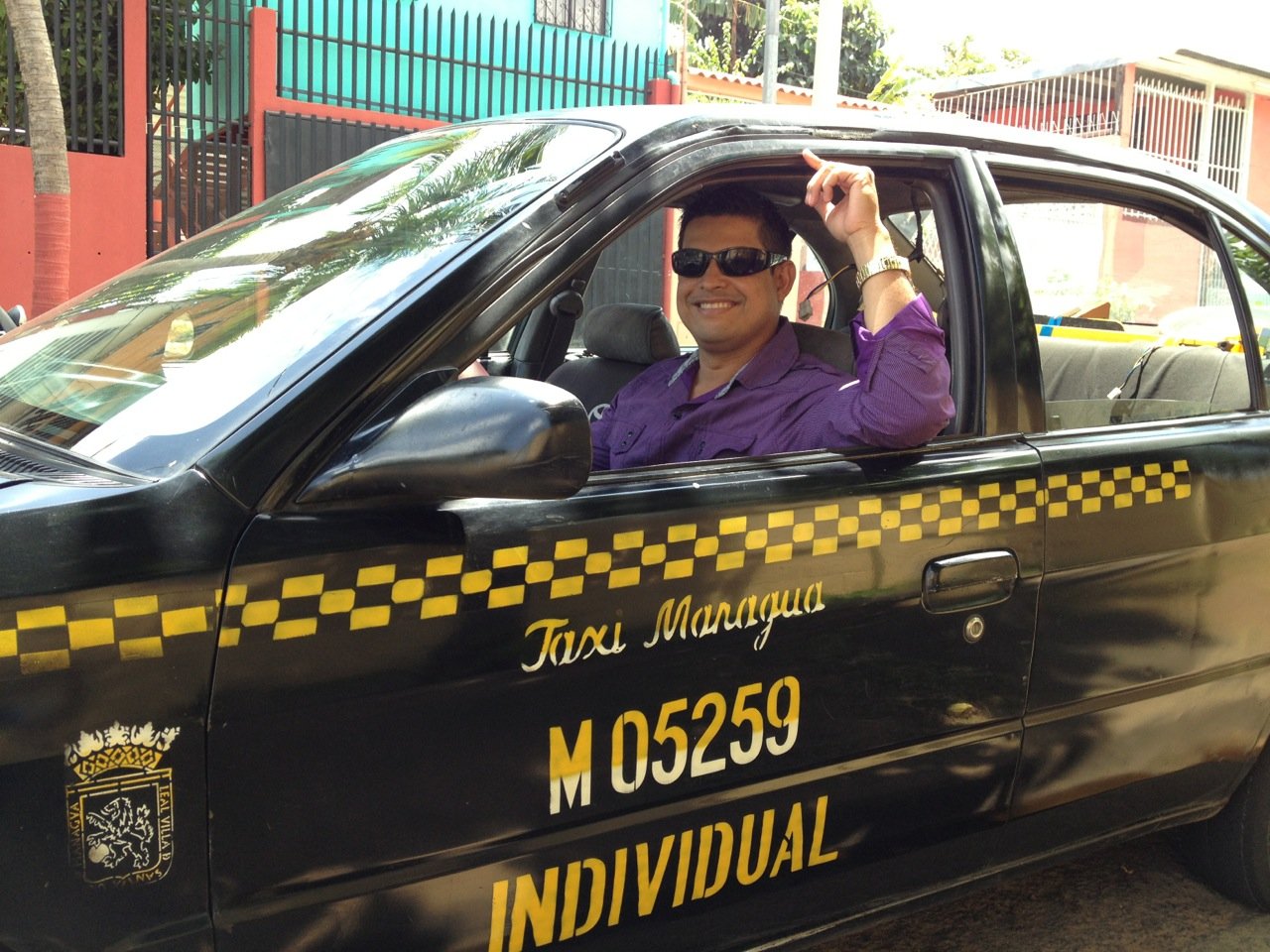
Nicaragua: Taxi Talk in a foreign tongue--BRILLANT ! (...not so much)
Individual Taxi in Managua The city of Managua is a big place. Too big to walk everywhere and I wasn't adventurous enough yet to ride the local buses. Taxis seemed the most logical option for me but I struggled with telling taxi drivers where I…
Continue reading...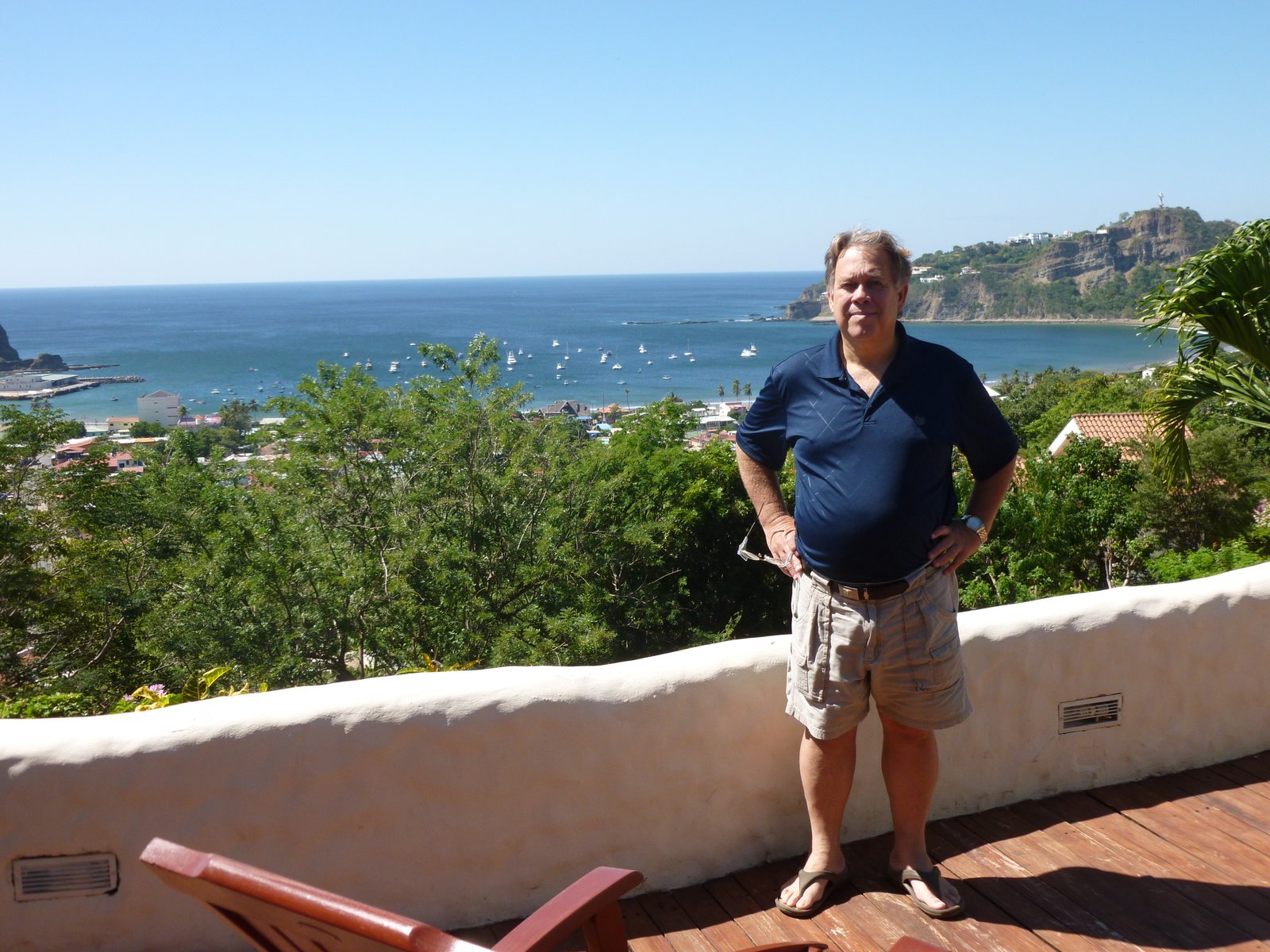
Nicaragua: Finding Jesus
Believe it or not, I, Steven Melnick, found Jesus. Yep. Not kidding. Right there in Nicaragua in the most unlikely place. Those who know me well are aware the last time I went to church regularly was for a date (seriously). But there, looking out over…
Continue reading...